- by foxnews
- 22 Mar 2026
Medieval graves reveal harsh reality of early Christians: 'Life was hard and short'
Danish archaeologists uncovered 77 medieval graves in Aarhus, revealing the harsh realities of 12th-century Christian life with an average life expectancy of 37 years.
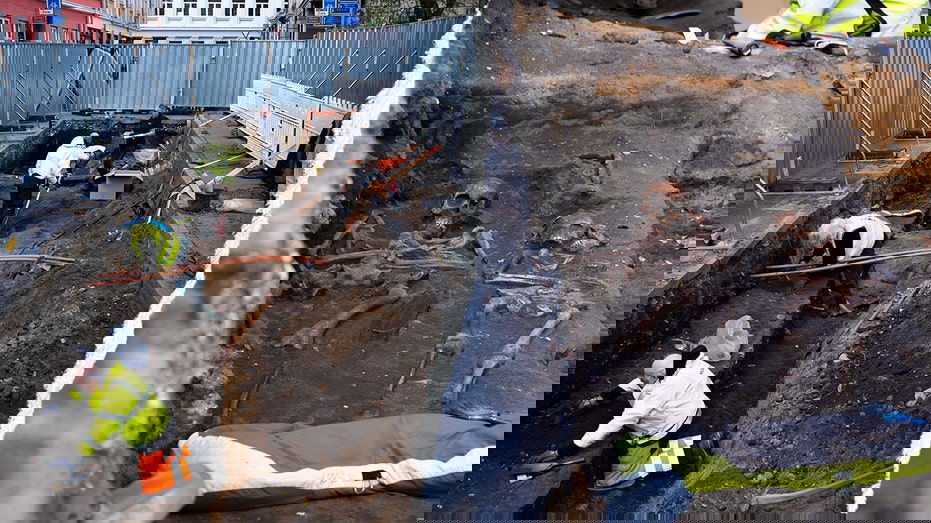
Officials from the Moesgaard Museum in Beder, Denmark, announced the discovery in a recent news release.
The skeletons were found in nearby Aarhus, in St. Oluf's Cemetery, which existed from the 1100s until 1813. It was named after St. Olaf, a Norwegian Viking king renowned for spreading Christianity across Scandinavia.
"The remains are believed to be up to 900 years old, belonging to a churchyard from the 12th century, near the old Viking town of Aros," the museum said in a statement. The discoveries came during a city project to upgrade waste facilities.
Mads Ravn, head of the Moesgaard Museum's local heritage department, told Fox News Digital his team uncovered a remarkable 77 ancient graves in total.
"[It was] much more than expected and very dense," he said.
The faith appears to have become firmly established in Aarhus by the 12th century; the cemetery represents graves that were firmly rooted in Christianity, rather than transitioning to it.
"The town of Aarhus, where the cemetery is found, is important because during its time of use it became the graveyard of the poor, while the rich were buried in the cathedral about 500 meters [1,640 feet] to the south," Ravn said.
"Therefore, it was densely packed with skeletons, with new burials sometimes disturbing older graves and leaving some of the skeletons in parts."
Few of the remains were buried with grave goods, but Ravn noted that one early modern grave featured a curious artifact.
"One from 1626 was buried with a coin in the mouth, suggesting that local folklore, and especially a tradition among sailors, seems to have prevailed," the archaeologist observed.
The real surprise of the excavation, said Ravn, was how much it revealed about the poor Christians of Aarhus, as opposed to the rich.
"[It] opens a door to understanding everyday life, and from other cemeteries we know that life was hard, with an average life expectancy around 37 years, often revealing many diseases," the archaeologist said.
"One find revealed three children buried on top of each other, as if they were buried after an infection, plague or another deadly disease," Ravn continued.
"Further analyses may reveal the cause of death and the age and sex of the skeletons in more detail."
The team's main takeaways from the dig were disease-related, as leprosy, plague, waterborne illness and syphilis and other ailments were all common causes of death in olden days.
"One could argue that this was the reason that they could bring all the new diseases to the New World, where it took a hard turn on the Native Americans," Ravn noted.
"Further analysis may reveal which diseases dominated."
you may also like


- by foxnews
- 22 Mar 2026
Famed national park drops 'environmental contaminant' ban ahead of America's 250th birthday

- by foxnews
- 22 Mar 2026
Air travelers are hacking TSA lines during hours-long major airport waits



travel
- by foxnews
- descember 09, 2016
Pilot claims Google Earth image may show Amelia Earhart's missing plane on Pacific island reef
A pilot says Google Earth satellite images of Nikumaroro Island may show Amelia Earhart's Lockheed Electra, missing since her 1937 around-the-world flight.
read more