- by foxnews
- 18 Mar 2026
From Mojave to Beijing: how America quietly conceded the rare earth race
How China gained control of 90% of rare-earth refining while the U.S. abandoned Mountain Pass mine, creating dangerous dependence on a strategic rival.
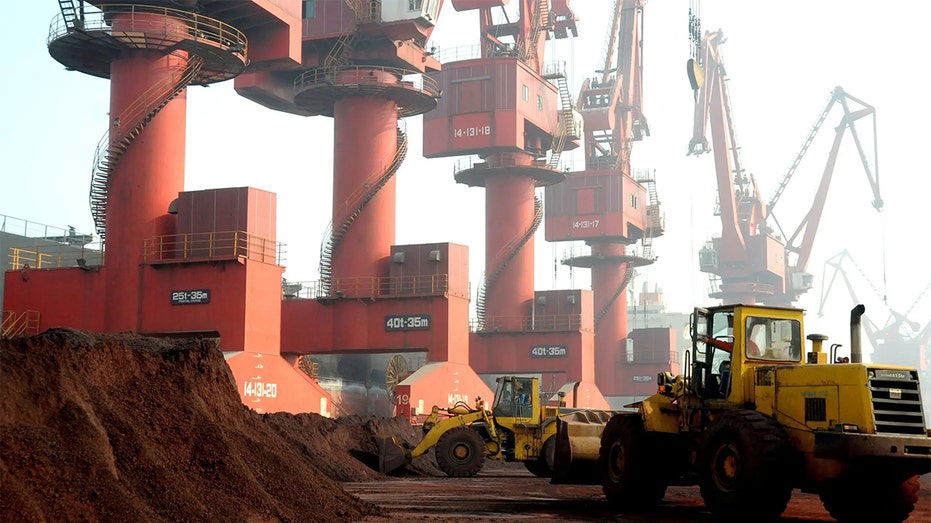
In the 1980s, Mountain Pass was the beating heart of a quiet American advantage. The ore pulled from its depths yielded neodymium, lanthanum and cerium - metals that powered radar systems, early computer chips and the guidance of precision munitions. At its peak, the mine met nearly two-thirds of global demand.
Then, almost overnight, it went silent.
As environmental rules tightened and global prices collapsed under China's state-subsidized production, the U.S. abandoned what had once been its mineral lifeline. Trucks stopped rolling. Processing plants rusted in the desert sun. And the world's most powerful economy became dependent on a rival for the elements essential to its defense.
Four decades later, that foresight has paid off. China now controls roughly 70 percent of global rare-earth mining and nearly 90 percent of refining - the most strategic and profitable step in the chain.
The U.S. didn't just lose ground in mining - it handed Beijing the technology that made rare earths valuable in the first place.
Abigail Hunter, executive director of the Ambassador Alfred Hoffman Jr. Center for Critical Mineral Strategy at SAFE, said the sale represented more than a bad deal - it was a strategic surrender. "We were focused on the internet and globalization, not on where our materials were coming from," she said. "Policy became episodic rather than strategic."
While Washington debated environmental rules and trade policy, China moved aggressively. "The United States had Mountain Pass and a few other capabilities tied to companies like GM," said Wade Senti, president of Advanced Magnet Lab. "But our total capacity was under 2,000 metric tons a year. Meanwhile, China poured money into innovation, refining and manufacturing at a scale that far exceeded what we ever had."
By the early 2000s, the U.S. mining and refining base had collapsed. The technology migrated east along with the supply chain. Beijing not only mined the minerals but mastered the high-value steps that turned them into finished magnets - the core of everything from fighter jets to electric vehicles.
"Between market forces and environmental restrictions … it's certainly led to a constraint with extracting resources," Senti said.
Rare-earth elements now underpin nearly every modern weapons system. "They steer missiles, power radar and drive the night-vision goggles Marines wear in the field," Hunter said. "If it moves, sees or communicates in today's military, there's probably a rare-earth element in it."
Washington's complacency cracked this spring when Beijing briefly restricted exports of rare-earth products - a warning shot that rippled through supply chains from Detroit to the Pentagon.
"When China required export licenses, some U.S. factory lines literally stopped," Hunter said. "The administration scrambled to negotiate with Beijing and simultaneously rolled out emergency support for MP Materials, the operator of Mountain Pass."
That deal marked a turning point: for the first time, the federal government backed an entire supply chain - from mine to magnet - using every tool at its disposal. Grants, loans, price supports and guaranteed purchases were deployed to jump-start domestic production.
MP Materials, which resumed mining at Mountain Pass in 2018 and ramped up refining to record levels before the Pentagon deal, is now expanding its magnet manufacturing facility in Texas. Another U.S. manufacturer in South Carolina has also begun producing magnets. But rebuilding the ecosystem will take time. "It's a ten-year project, not something we can do in a year," Hunter said. "We're starting to see progress, but we're nowhere near self-sufficiency."
The Trump administration has put the U.S. on a wartime footing for decoupling with China, taking a 15 percent stake in MP Materials in an unprecedented arrangement and pushing a wave of international critical-minerals agreements meant to cut Beijing out of key supply chains.
Over the past year, Washington has signed multi-billion dollar partnerships across five continents - including a $10 billion package of new projects announced this fall. A landmark framework with Australia commits both nations to co-invest roughly $1 billion each in rare-earth and battery-metal ventures, while parallel agreements with Japan and South Korea focus on securing non-Chinese refining and magnet production.
The administration has also turned to Africa, signing deals with Rwanda and the Democratic Republic of the Congo to trace and develop mineral supply routes, and to Ukraine, where a 2025 reconstruction fund gives U.S. companies preferred access to future mining projects. Together, the web of pacts marks the most aggressive U.S. mineral diplomacy since the Cold War - a global race to control the elements that power modern weapons, vehicles and technology.
"The international deals may buy time," Senti said, "but they're no substitute for restoring the industrial base that once made us the world's undisputed source of strategic minerals."
Both Hunter and Senti see the next few years as decisive. The same materials that once powered America's Cold War innovation now underpin China's economic and military strength.
"We have to reform permitting so we can actually build mines and refineries here," Hunter said. "We can't keep pretending it's someone else's problem while importing everything."
For Senti, the mission is more direct. "There's a lot of work to do," he said. "Companies like ours are boots on the ground trying to unlock the bottlenecks."
In the Mojave Desert, the trucks at Mountain Pass are running again - small symbols of a nation trying to reclaim what it lost. But as China continues to tighten its grip on the minerals that drive the modern world, America's comeback in the resource race is only just beginning.
you may also like

- by foxnews
- 18 Mar 2026
A basic monthly bill Americans can't dodge is becoming a midterm flashpoint
- by foxnews
- 18 Mar 2026
Map shows glaring scope of auto theft increase in Walz's Minneapolis: 'Deterrence problem'


travel
- by foxnews
- descember 09, 2016
Temple from time of Christ reveals powerful society lost to history, archaeologists say
Archaeologists uncovered a 2,000-year-old temple in Denmark at Hedegård, revealing insights into a mysterious Iron Age power center with luxury goods and Roman connections.
read more