- by foxnews
- 05 Mar 2026
NASA returns humans to deep space after over 50 years with February Artemis II Moon mission
NASA announces Artemis II launch date for Feb. 6, sending four astronauts around the Moon for the first time in over 50 years in historic 10-day mission.
- by foxnews
- 15 Jan 2026
- in technology
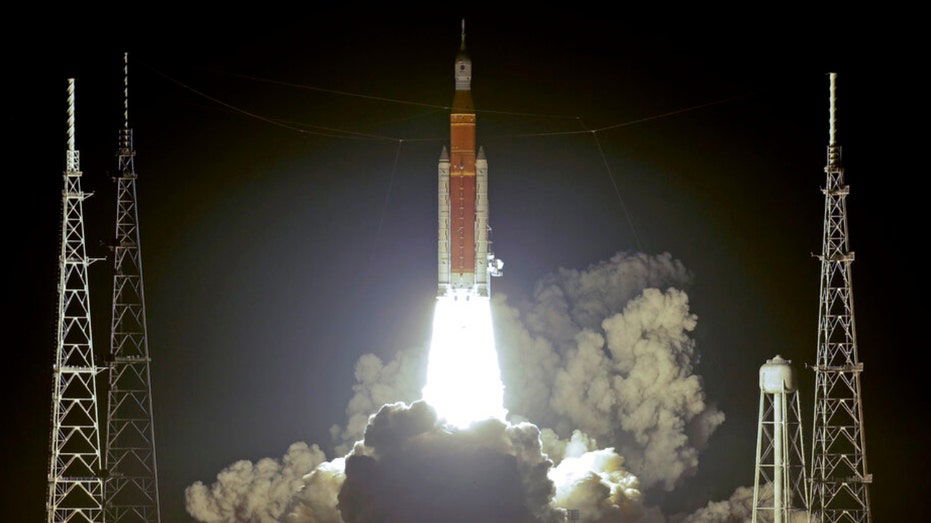
"We are going - again," NASA said Tuesday in a post on X, saying the mission is set to depart no earlier than Feb. 6.
If the launch is scrubbed, additional launch periods will open from Feb. 28 to March 13 and from March 27 to April 10. For the former, launch opportunities will be available on March 6, 7, 8, 9 and 11, and for the latter on April 1, 3, 4, 5 and 6.
Preparations are underway to begin moving the rocket to the launch pad no earlier than Jan. 17. The move involves a four-mile journey from the Vehicle Assembly Building to Launch Pad 39B aboard the crawler-transporter 2, a process expected to take up to 12 hours.
"We are moving closer to Artemis II, with rollout just around the corner," Lori Glaze, acting associate administrator for NASA's Exploration Systems Development Mission Directorate, said. "We have important steps remaining on our path to launch and crew safety will remain our top priority at every turn, as we near humanity's return to the Moon."
The 322-foot rocket will send four astronauts beyond Earth orbit to test the Orion spacecraft in deep space for the first time with a crew aboard, marking a major milestone following the Apollo era, which last sent humans to the Moon in 1972.
The crew includes NASA astronauts Reid Wiseman, Victor Glover and Christina Koch, along with Canadian Space Agency astronaut Jeremy Hansen, making Artemis II the first lunar mission to include a Canadian astronaut and the first to carry a woman beyond low Earth orbit.
That maneuver will send the spacecraft on a four-day trip around the far side of the Moon, tracing a figure-eight path that carries the crew more than 230,000 miles from Earth and thousands of miles beyond the lunar surface at its farthest point.
Instead of firing engines to return home, Orion will follow a fuel-efficient free-return path that uses Earth and Moon gravity to guide the spacecraft back toward Earth during the roughly four-day return trip.
Artemis II follows the uncrewed Artemis I mission and will serve as a critical test of NASA's deep-space systems before astronauts attempt a lunar landing on a future flight.
you may also like


- by foxnews
- 05 Mar 2026
Scams that aren't illegal (but should be)

- by foxnews
- 04 Mar 2026
China's compact humanoid robot shows off balance and flips



travel
- by foxnews
- descember 09, 2016
Risky 'airport theory' has travelers cutting arrival time for flights 'way too close,' says expert
The viral "airport theory" trend has flight travelers arriving just 15 minutes before boarding in a risky gamble to avoid terminal waits. Online searches have surged 11,000%.
read more