- by foxnews
- 27 May 2026
GOP infighting replaces clash with Dems, derails path to end historic DHS shutdown
House Republicans reject the Senate's Department of Homeland Security spending plan, with the Freedom Caucus pushing to fund the entire department through budget reconciliation.
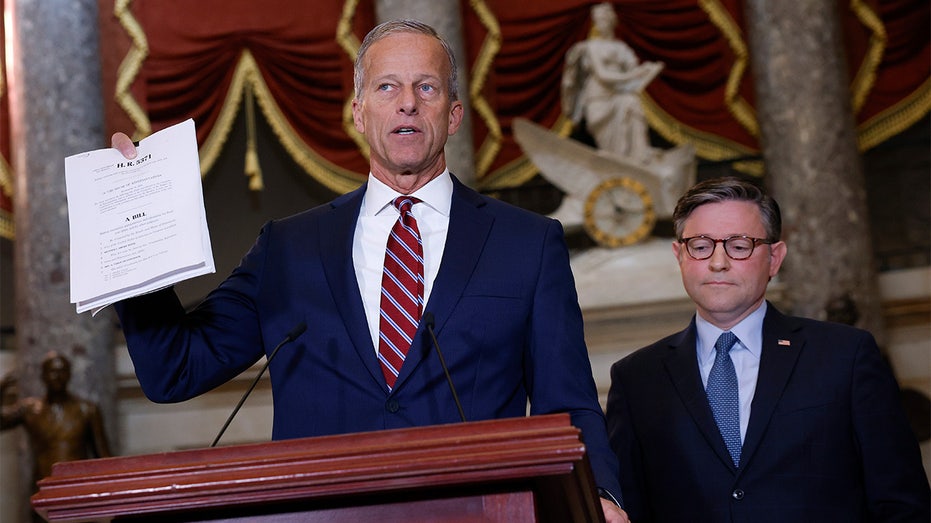
Congress is in no rush to end the longest shutdown in history, despite having a deal in place and a backup plan that could both fund the Department of Homeland Security (DHS) and secure cash for immigration operations for years to come.
Lawmakers in both chambers left Washington for a two-week recess around Easter and are not scheduled to return until Monday. Meanwhile, Republicans have pitched rival plans that, if not quickly resolved, could prolong the funding standoff into the summer.
After nearly two months of fighting with congressional Democrats, the shutdown back and forth has now evolved into infighting among the GOP across both chambers. That development, and differing views on how to reopen the Department of Homeland Security, threaten to prolong the shutdown.
"My question for anybody who doesn't like what we did is: give me a better idea. Give me another option," Thune said. "We'll see, ultimately, what the House does with it."
When the House returns Tuesday, the shutdown will have reached 59 days.
Still, Republicans in the lower chamber are furious that they again have to consider the Senate's compromise deal and are threatening to further prolong the shutdown.
The House had an opportunity in recent days to pass the bill, but Republicans opted against it. Instead, they held a conference call where lawmakers said they would not vote for the Senate plan until there was meaningful progress on a reconciliation package.
"We cannot leave ICE and CBP hanging with nothing but hopes and prayers that reconciliation 2.0 comes together," the group wrote on social media. "That's why we must use reconciliation to fully fund all of the Department of Homeland Security."
"It's a Republican shutdown," Schumer told CNN. "All he had to do was put that bill on the floor, and it would have passed overwhelmingly. So Republicans are hardly unified. They're squirming about."
Some pressure has eased on Congress to act after Trump in March moved to pay all Department of Homeland Security employees using existing funds. However, it is unclear whether that arrangement can last for several months without new appropriations from Congress.
Meanwhile, leapfrogging the typical government funding process could establish a new precedent.
Normally, appropriators craft spending bills to fund the dozen agencies that make up the federal government. It's a bipartisan process in which both sides typically walk away with a win.
But using budget reconciliation shifts that power away from appropriators and sidelines the bipartisan process.
"Republicans have decided to take that route, so they should be very wary about the precedent," said Sen. Chris Van Hollen, D-Md.
you may also like


- by foxnews
- 27 May 2026
Trump flexes MAGA muscle in Texas Senate runoff clash between Cornyn and Paxton





travel
- by foxnews
- descember 09, 2016
Extreme depth made fatal cave dive perilous at luxury honeymoon destination
Authorities describe the recovery of five Italian divers killed in a deep Maldives underwater cave as extremely difficult due to the depth and the currents.
read more