- by foxnews
- 03 May 2026
Runway-to-Space Challenge brings spaceflight closer
A new U.S. competition lets teams fly payloads on a reusable spaceplane, offering rapid access to microgravity and changing how space research works.
Sign up for my FREE CyberGuy Report
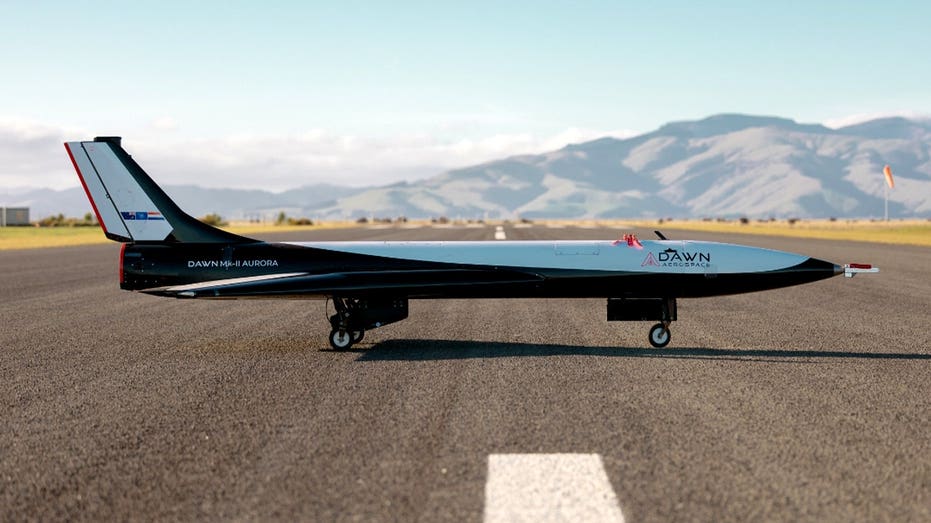
On its own, that may sound similar to other suborbital missions. What makes this different is how often it can fly. The Aurora is designed for rapid turnaround, which means it can land, be prepared again and return to flight much faster than a traditional launch system. That shift removes one of the biggest bottlenecks in space research.
The Aurora spaceplane has already completed more than 60 missions, with a focus on making access to the edge of space more routine and scalable.
"Meaningful access to microgravity typically means going to orbit, which is expensive, slow, and often out of reach for early-stage ideas," said Stefan Powell, CEO of Dawn Aerospace. "Aurora changes that by giving teams a fast, lower-cost way to access microgravity and iterate within months. It's not a substitute for long-duration missions, but it enables experiments that would otherwise never leave the ground, turning ideas that might never have flown into viable missions that can ultimately progress to orbit."
That idea of faster iteration is what makes this program stand out. It gives researchers a way to test concepts, adjust them and return to flight without long delays.
Former NASA Administrator Jim Bridenstine also sees the bigger picture.
"This competition is about capturing the imagination of scientists, engineers and researchers, while also enabling a new way of working, where research can move faster, iterate more frequently, and strengthen U.S. leadership in space-enabled science and industry."
Think about how commercial aviation works. Planes land, refuel and take off again in a matter of hours. That same rhythm is now being applied to space access. Instead of designing a perfect experiment for a single launch, researchers can test, adjust and fly again. That creates a more flexible process where ideas can evolve in real time.
Programs like this reflect a broader push to speed up space research and make it more responsive. When teams can test ideas more frequently, progress tends to follow. The timeline reflects that long view. Applications open in April 2026 and close in September, with flights expected to begin in 2027. That gives teams time to prepare payloads while the supporting infrastructure continues to expand.
If you are wondering who can actually take part, the program is structured to center on Oklahoma institutions while still allowing broader collaboration. Applications must be led by an Oklahoma-based university or research institution, though out-of-state partners can join as collaborators. The application window opens April 16, 2026, and closes Sept. 25, 2026, at 5 p.m. CT.
Selected teams will be able to fly payloads weighing up to 33 pounds. Each mission can reach altitudes of about 62 miles, exceed Mach 3.5 and provide up to 127 seconds of microgravity. Flights are expected to begin in mid- to late 2027, giving teams about a year to prepare.
Even if you are not working in aerospace, this shift could still affect you. When access to space becomes faster and more flexible, innovation tends to accelerate. Research that once took years can move forward in shorter cycles. That can influence everything from materials science to weather forecasting.
Think your devices and data are truly protected? Take this quick quiz to see where your digital habits stand. From passwords to Wi-Fi settings, you'll get a personalized breakdown of what you're doing right and what needs improvement. Take my Quiz here: Cyberguy.com.
Spaceflight has always pushed the limits of what is possible, but the process has remained slow for a long time. The Runway-to-Space Challenge points to a future where reaching the edge of space becomes more practical and repeatable. That alone could unlock ideas that have been sitting on the sidelines. If space starts to operate more like aviation, the pace of discovery could change in ways that ripple far beyond the aerospace industry.
If spaceflight becomes routine enough for constant testing, how quickly should we expect new technologies to move from experiments to everyday life? Let us know by writing to us at CyberGuy.com.
Sign up for my FREE CyberGuy Report
Copyright 2026 CyberGuy.com. All rights reserved.
you may also like



- by foxnews
- 03 May 2026
'86 47' slogan tied to James Comey resurfaces at May Day protests across US
travel
- by foxnews
- descember 09, 2016
Major US city urges residents to work from home this summer for highly unusual reason
Officials urge New York and New Jersey commuters to work from home during 2026 World Cup matches, warning of extreme congestion across transit systems.
read more